Introduction – Why this product is useful
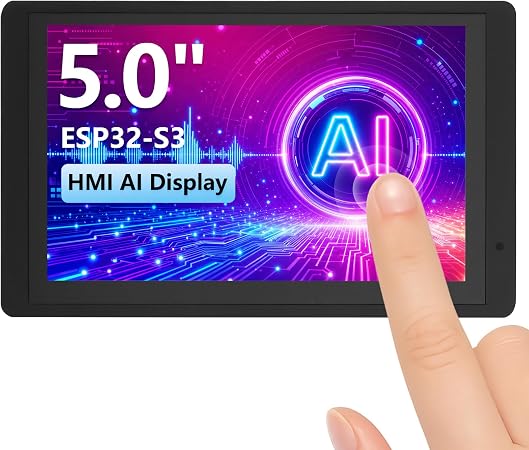
The IoTeikXgo ESP32 HMI Display offers an advanced interface solution for developers engaged in smart home or interactive IoT projects. Its 5-inch IPS touchscreen with an 800×480 resolution promises vivid colors and a wide viewing angle, making it extremely suitable for graphical user interfaces. Under the hood, the device houses the powerful ESP32-S3 processor, which supports AI voice interactions and provides a platform for both speech recognition and synthesis. With heaps of connectivity options and a developer-friendly interface, this product is a versatile choice for anyone looking to build on IoT projects that require dynamic interfacing and control.
Pros & Cons
- Pros:
- Powerful ESP32-S3 processor offering robust performance
- High-resolution 800×480 IPS touchscreen ensures clear visuals
- Supports both WiFi and Bluetooth 5.0 for flexible connectivity
- AI voice interaction capabilities, ideal for smart environments
- Supports multiple wireless modules for expanded smart home applications
- Cons:
- Glossy display surface could be prone to fingerprints and glare
- Might be overwhelming for beginners due to its wide range of features
- Requires some initial setup and configuration which might deter non-technical users
Comparison – Compare with similar options
When compared to similar products like the Raspberry Pi 7" Touchscreen and the Adafruit 3.5" TFT Display, the IoTeikXgo ESP32 HMI Display stands out with its high processing power and additional AI voice interaction capability. The Raspberry Pi option offers a larger screen but lacks the same level of built-in wireless module support and voice interaction features. On the other hand, the Adafruit TFT Display is more compact but does not provide the same breadth of connectivity features or processing power. Moreover, IoTeikXgo's wide support for development platforms like Arduino IDE, ESP-IDF, and PlatformIO makes it a more flexible and developer-friendly option.
User Tips / Usage Guide
-
Initial Setup: Begin by setting up your display using the Arduino IDE or ESP-IDF to establish your development environment. Make sure to have the necessary libraries installed.
-
Voice Interaction Configuration: Utilize the microphone and speaker interfaces to configure and experiment with AI voice detection and control features for a hands-free interface experience.
-
Maximize Viewing Experience: Keep the glossy surface clean to prevent glare during use, especially in well-lit environments.
-
Utilize the Wireless Modules: Take advantage of its compatibility with Zigbee, Thread, and other protocols for diversified IoT solutions and reliable connectivity.
-
Exploit SD Card Slot: Use the SD card slot for additional storage and project data management, making it ideal for complex projects requiring extensive data handling.
-
Leverage the Wide Viewing Angle: For applications requiring different viewing directions, utilize the IPS display’s 178° angle to ensure comfortable visibility for all users.
-
Battery and RTC Utilization: Use the RTC and battery interface for real-time clock functions and reliable power management in portable applications.
-
Explore Diverse Interfaces: Experiment with UART, I2C for connecting peripheral devices, expanding functionality beyond standard display applications.
Conclusion – Who should buy
The IoTeikXgo ESP32 HMI Display is an excellent purchase for advanced developers and tech enthusiasts focusing on IoT development or smart home applications. Its robust ESP32-S3 processor and support for AI speech interaction mark it out as a prime candidate for those looking to implement advanced user interfaces and control systems. Educational institutions may find it a suitable learning tool for teaching IoT design and development due to its wide-ranging capabilities and compatibility with various programming environments. However, absolute beginners or those with minimal technical know-how might prefer starting with simpler models to avoid being overwhelmed by the device's complexity.